Range / Stove · Burner won't heat
Stovetop Burner Won't Heat: Coil, Smoothtop, and Gas Burners
Updated
One dead burner on a stove that otherwise works is almost always a problem with that burner's own parts: the element, its connection, or the switch that controls it. The way to find which one depends on the type of cooktop.
Before you open anything: unplug the range or switch off its breaker, and let the cooktop and oven cool completely. An electric range runs on a 240-volt circuit; a gas range also has a gas line — close the gas shut-off valve behind it before you move it. If you smell gas, do not work on the range: leave the house, do not touch light switches, and call your gas utility from outside. Gas valves, regulators and gas lines are a job for a licensed technician in many areas.
Electric coil burners
Coil elements plug into a receptacle and lift out. That makes them easy to test by swapping:
- With the cooktop cool, unplug the dead coil and plug it into a working position of the same size.
- If it heats there, the coil is fine. The fault is in the original position: the receptacle or the switch.
- If it still does not heat, the coil is the part.
Look at the receptacle as well. Burnt, pitted or loose contacts make a coil heat intermittently or not at all, and they burn out a new coil. Replace the receptacle along with the coil if it looks scorched.
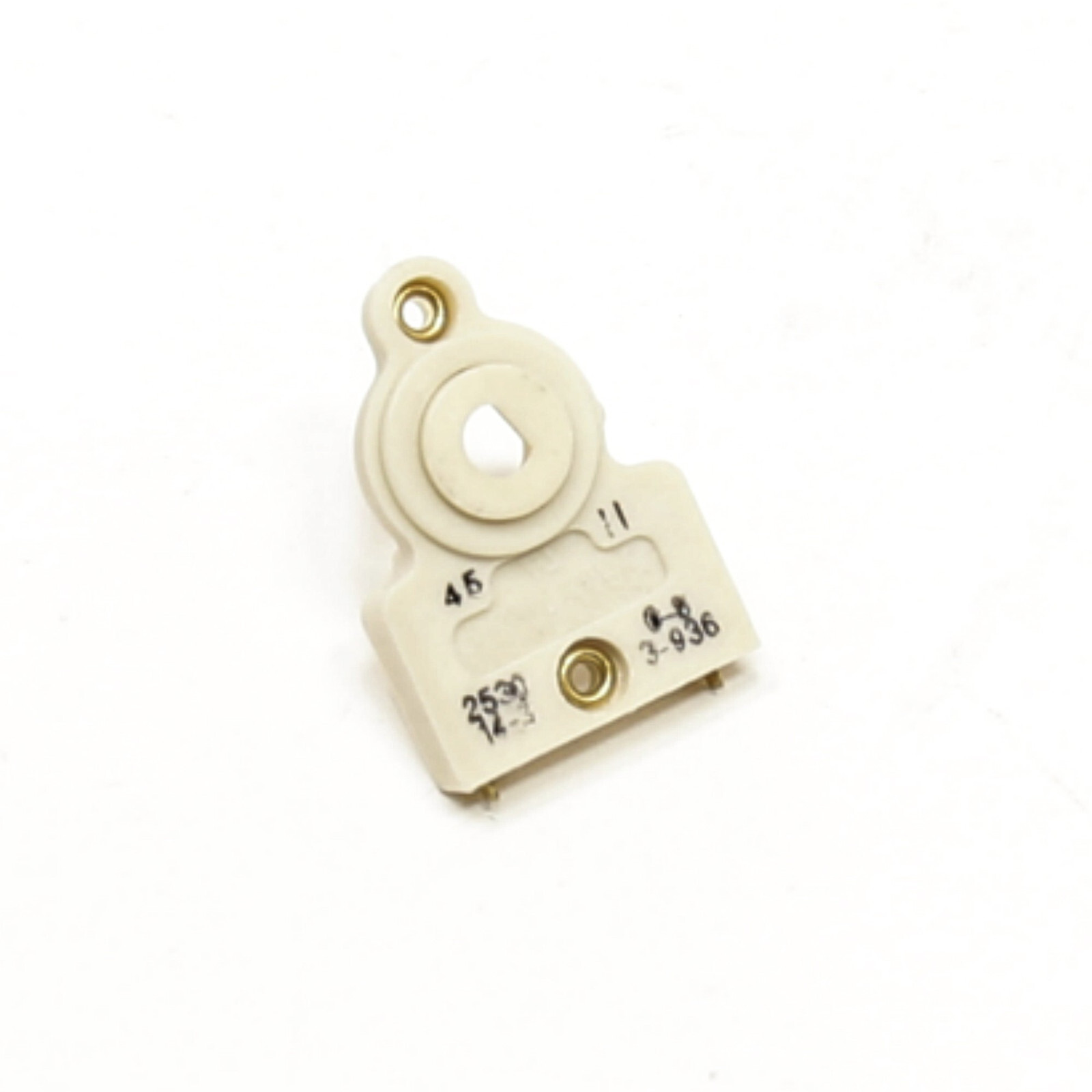
If a good coil does not heat in the original position and the receptacle looks clean, the infinite switch behind that knob is the likely part. It is the switch that cycles power on and off to hold the setting.
Smoothtop (glass) cooktops
Radiant elements sit under the glass and cannot be swapped. If one does not glow at all, the element itself, its limiter, or its switch has failed — test each for continuity with the power off. If it glows only on high, or stays on high whatever the setting, the switch is the usual cause.
If the glass is cracked, stop using that cooktop. A crack can expose live parts and spill onto the element.
Gas burners
- Clicking but no flame. Check the burner cap first: it must sit flat and centered on the burner head. Water from a boil-over or cleaning can keep a burner from lighting until it dries, and food in the burner ports blocks the gas. Clear the ports with a straight pin, never a toothpick (it breaks off).
- No click at all. The spark igniter, its wire, or the spark module is not firing. If no burner clicks, suspect the module; if only one does not, suspect that igniter or its switch.
- Clicking that does not stop after the burner lights. Moisture under the cap or a shorted switch.
- A burner that lights with a match but not by itself is an ignition problem, not a gas problem.
Before you order the part
Range parts are model-specific, and gas and electric versions of the same range take different burners, elements and controls. The model plate is your only reliable source. On most ranges it is on the frame behind the storage or broiler drawer, or around the oven door opening. If you are not sure where to look, our model number guide shows each spot.
Ask before you install. Not sure it fits? Check your model number for free before you buy. Our fit check is optional; if it does not come back as a clear match, send us the full model number through Contact us before you order. Once a part has been installed we can only take it back if it arrived defective, we shipped the wrong item, or the listing was wrong on our end, and it has to come back in the condition it went out in. Checking first is faster than returning.